 Pin It
 There's something about coconut cake that stops conversation mid-sentence. Years ago, my aunt brought one to a family dinner, and I watched my grandmother take a bite of that fluffy white cake with its cloud-like frosting, and she just closed her eyes. That moment taught me that coconut cake isn't just dessert—it's a small luxury, the kind of thing that makes people feel genuinely celebrated. I've been chasing that exact feeling ever since.
I made this cake for a friend's engagement party, and she cried when she saw it. Not because it was perfect—one side was slightly uneven—but because someone had spent hours layering and frosting and thinking of her. That's when I realized the imperfections are actually what make it matter.
Ingredients
- Cake flour: Use it, don't substitute with all-purpose—it's what gives this cake its tender, almost delicate crumb that practically melts on your tongue.
- Room temperature ingredients: This matters more than you'd think; cold butter and eggs won't cream properly and you'll end up with a dense cake.
- Egg whites only: This is the secret to the pale, almost white color that makes coconut cake look so ethereal.
- Whole milk: It keeps the cake moist and tender; substituting almond or another milk changes everything.
- Unsweetened coconut milk for the filling: The sweetened shredded coconut gives plenty of sugar, so you need this balance or the filling becomes cloying.
- Cream of tartar: Don't skip it—this stabilizes the egg whites and prevents that grainy texture that sometimes happens with meringue.
- Shredded coconut for decoration: Toasted brings out a deeper, nuttier flavor; plain keeps it elegant and bright.
Tired of Takeout? 🥡
Get 10 meals you can make faster than delivery arrives. Seriously.
One email. No spam. Unsubscribe anytime.
Instructions
- Set yourself up for success:
- Preheat your oven and prepare those three pans while everything comes to room temperature. Room temperature butter and eggs are non-negotiable here—they're what create that perfect, feathery crumb.
- Build your dry base:
- Whisk flour, baking powder, and salt together, then set aside. This distributes the leavening evenly and prevents lumps later.
- Cream until it's fluffy:
- Beat butter and sugar for a solid three minutes until it's pale, almost white, and fluffy enough to hold peaks. You'll see the mixture transform—that's exactly what you want.
- Add eggs slowly and deliberately:
- Mix in one egg white at a time, waiting for each to blend completely before adding the next. This might feel slower than you'd like, but it's what keeps the batter emulsified and smooth.
- Alternate and balance:
- Start with flour, then milk, then flour again. Mix gently—just until everything disappears into the batter, no more. Overmixing develops gluten, which makes the cake tough.
- Divide and bake:
- Split the batter evenly among pans and smooth the tops slightly. Bake until a toothpick inserted in the center comes out clean—about 25 to 30 minutes depending on your oven.
- Cool with patience:
- Let cakes rest in the pans for ten minutes so they set slightly, then turn them out onto racks to cool completely. This prevents them from breaking apart.
- Make the filling while cakes cool:
- Simmer coconut milk and sugar together until the sugar dissolves, stir in shredded coconut, then let it cool to room temperature. It thickens as it sits, becoming perfect for spreading.
- Whip the frosting:
- Set your heatproof bowl over simmering water and whisk egg whites, sugar, water, and cream of tartar for about seven minutes until stiff peaks form and the frosting looks glossy. Remove from heat, add vanilla, and beat two more minutes until it's cool enough to spread.
- Assemble with care:
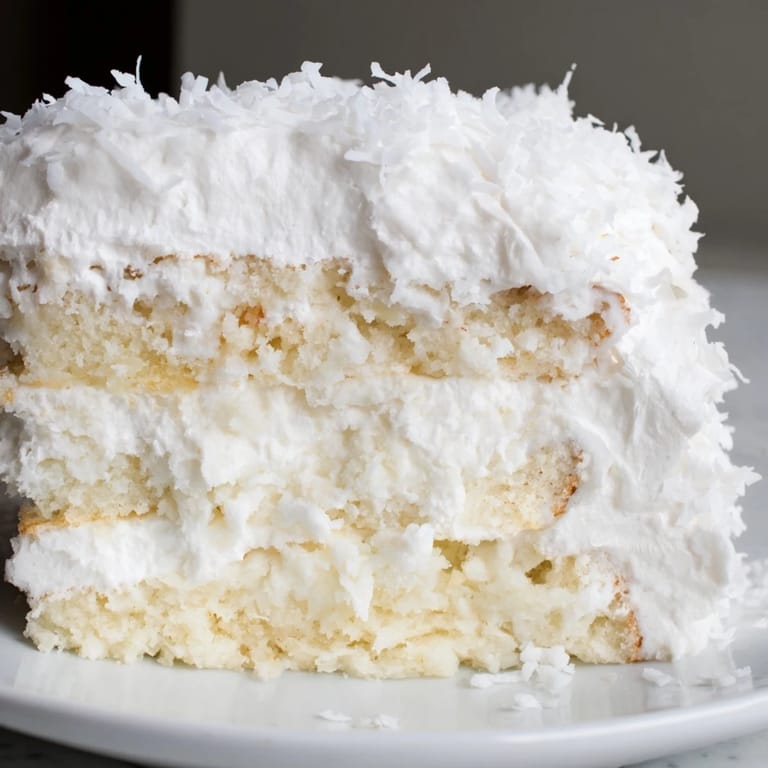
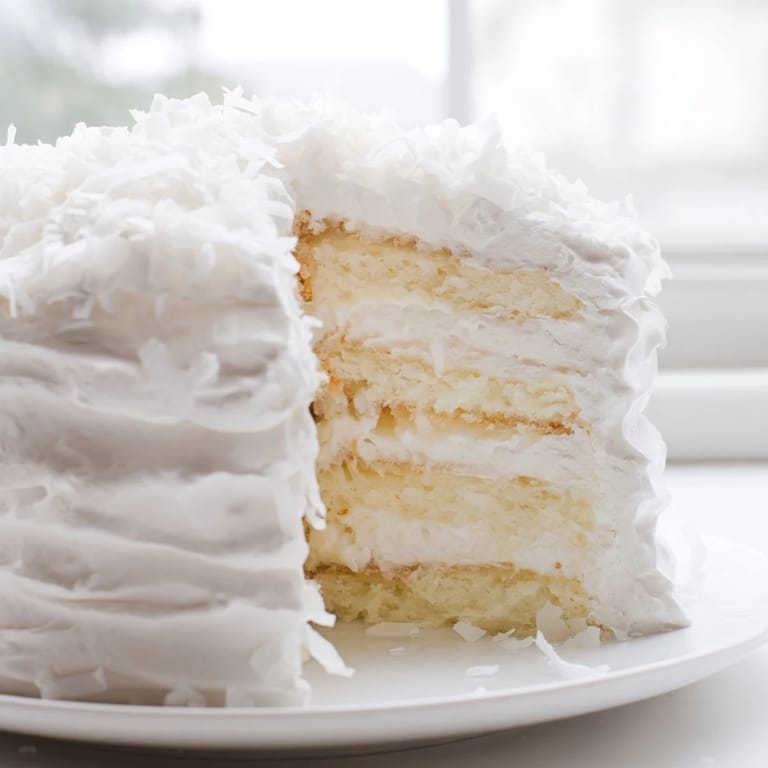
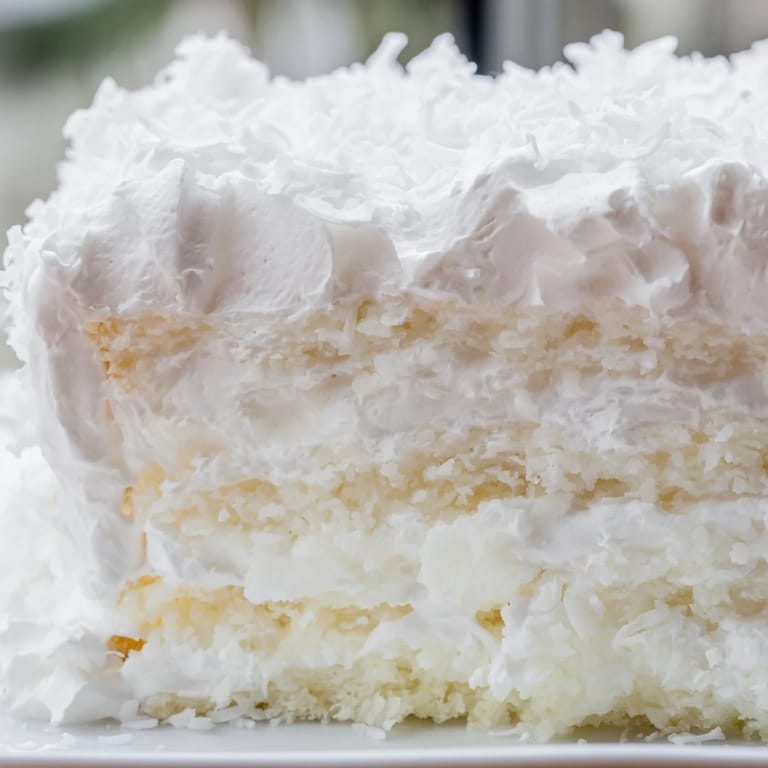
- Place one layer on your platter, spread half the filling, add the second layer and remaining filling, then top with the third layer. Frost the whole thing evenly, then press coconut onto the sides and top.
- Let it set:
- Wait at least 30 minutes before slicing so the frosting firms up and the layers stay put.
 Pin It
 My neighbor knocked on my door one evening and asked if I had time to teach her how to make this cake. We spent three hours in my kitchen, laughing when she accidentally dipped her thumb into the frosting, celebrating when the layers didn't slide, and talking through every step like it mattered. It did.
Why Coconut Makes Everything Better
Coconut is this quiet luxury—it doesn't shout, but it transforms everything it touches. In this cake, the filling acts like a secret ingredient, binding the layers together while adding this creamy, almost tropical whisper. The toasted coconut on the outside catches the light and adds texture that makes people want to touch the cake before they even taste it.
The Magic of Meringue Frosting
Seven-minute frosting seems complicated but it's actually quite forgiving once you understand what's happening. You're essentially cooking egg whites with sugar and heat until they transform into this fluffy cloud. The cream of tartar is your secret weapon—it prevents the frosting from becoming grainy and helps it hold its shape. The best part is how it looks: impossibly white, with these soft peaks and valleys that catch the light.
Timing and Temperature Matter
I learned this the hard way after making this cake on a humid summer afternoon. The frosting took forever to set, the cake started feeling damp, and I nearly threw in the towel. Since then, I've learned to work in a cool kitchen, make sure all ingredients start at room temperature, and give myself plenty of time for cooling between steps. Rushing this cake shows immediately, so patience genuinely pays off.
- Room temperature ingredients blend smoothly and create an even, tender crumb.
- Cool cakes completely before frosting or the frosting will melt and slide right off.
- Assemble this cake the day you plan to serve it for the best texture and flavor.
 Pin It
 This cake represents everything I love about cooking: taking simple ingredients and turning them into something that makes people feel cherished. Make it, share it, and watch what happens.
Recipe FAQs
- → How do I achieve the light texture in the cake layers?
Beating the butter and sugar until fluffy and carefully folding in the flour mixture helps create a tender crumb. Using room temperature ingredients also aids in even mixing.
- → What is seven-minute frosting and how is it made?
It's a glossy meringue frosting made by whipping egg whites, sugar, and cream of tartar over simmering water until stiff peaks form, then flavored with vanilla.
- → Can I prepare the coconut filling ahead of time?
Yes, the coconut filling can be made in advance and chilled; just bring it back to room temperature before spreading to maintain a spreadable consistency.
- → How should the cake be stored after assembly?
Keep the cake covered and refrigerated to maintain freshness, especially due to the meringue frosting and coconut filling.
- → What variations can enhance the coconut flavor?
Substituting half the milk in the layers with coconut milk or using toasted shredded coconut for decoration intensifies the coconut taste and adds texture.