 Pin It
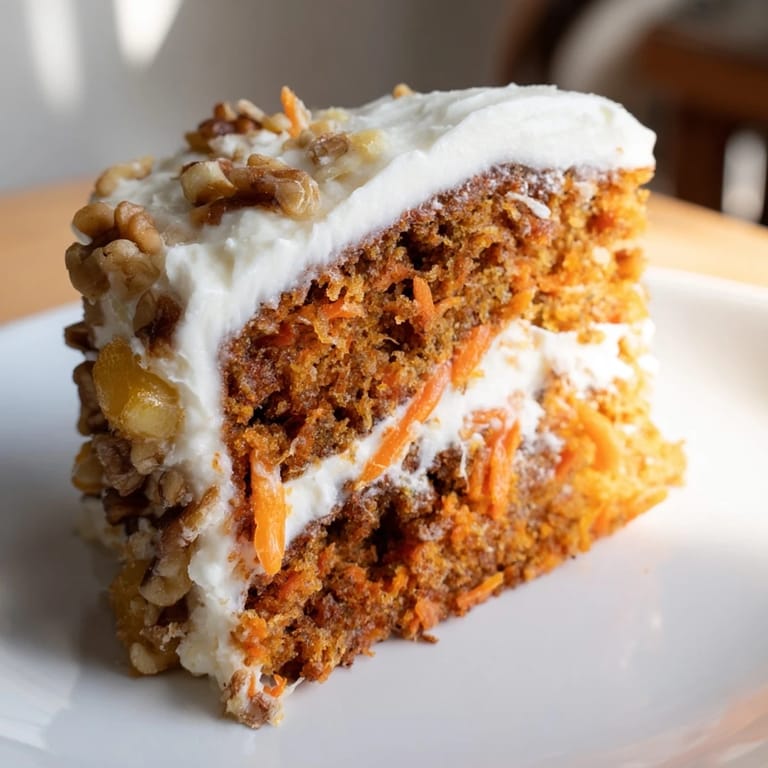
 My grandmother's kitchen always smelled like cinnamon and wet carrots on Sunday afternoons, and I spent years watching her grate carrots by hand before finally understanding why this cake became the thing everyone requested. The first time I made it myself, I was surprised by how the oil keeps everything impossibly moist—not dense, just tender in a way that makes you take another bite before you've swallowed the first. That cream cheese frosting is where the magic happens, turning what could be a simple spiced cake into something that feels like a celebration.
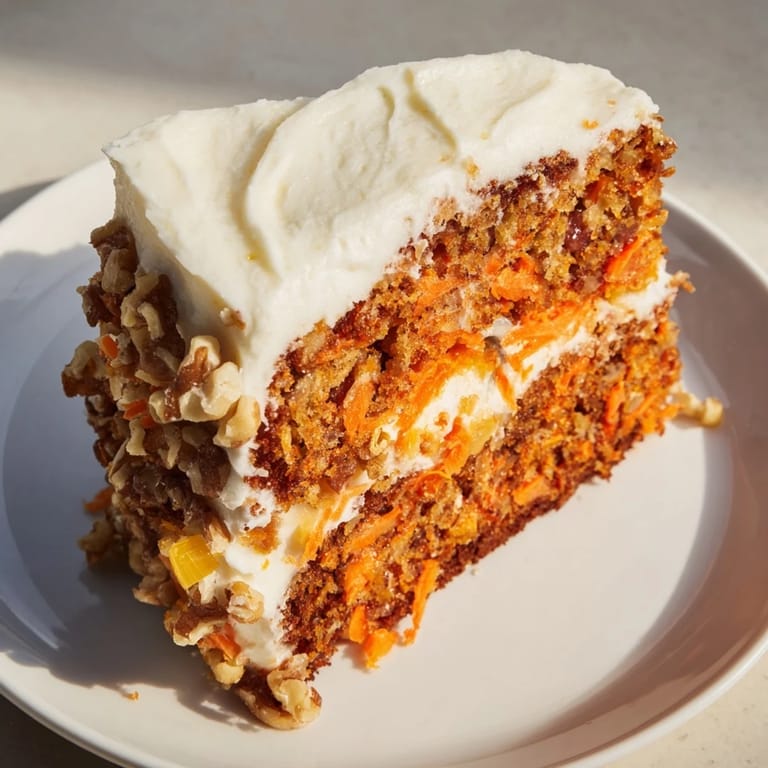
I remember bringing this cake to a neighborhood potluck in March, still skeptical that people would choose it over flashier desserts, and watching three different conversations pause mid-sentence when someone cut into it. The way the frosting pulled away from the crumb, how the spices hit you first and then that unexpected sweetness—it converted someone's kid from a confirmed carrot-hater into asking for the recipe. That's when I knew it wasn't just nostalgia working in my favor.
Ingredients
- All-purpose flour (2 cups): The foundation—make sure it's not packed down when you measure, or you'll end up with something denser than intended.
- Ground cinnamon, nutmeg, and ginger: These three are the voice of the cake; don't skip the ginger, it adds a subtle warmth that makes people wonder what's different.
- Baking powder and baking soda: Use both—the combination ensures the cake rises properly without tasting metallic.
- Granulated and brown sugar: The brown sugar adds moisture and a subtle molasses note that deepens the whole flavor.
- Vegetable oil: This is crucial; butter would make it too heavy, but oil keeps it tender and moist for days.
- Eggs: Add them one at a time and actually beat after each one—it incorporates air that makes the crumb lighter.
- Grated carrots: Use a box grater, not a food processor; you want distinct carrot pieces, not pulp.
- Walnuts or pecans: Toast them first if you have ten minutes; it changes everything about their flavor.
- Crushed pineapple: Drain it really well in a fine-mesh strainer, or you'll add too much moisture and the cake becomes soggy.
- Cream cheese and butter for frosting: Both must be softened at room temperature, or you'll be fighting lumps and your shoulders will hurt.
- Powdered sugar: Sift it even if it seems silly; lumps in frosting are impossible to smooth out once they're mixed in.
Tired of Takeout? 🥡
Get 10 meals you can make faster than delivery arrives. Seriously.
One email. No spam. Unsubscribe anytime.
Instructions
- Set yourself up for success:
- Preheat to 350°F and prepare two 9-inch pans by greasing them generously, then flouring or lining with parchment—I prefer parchment because the cake releases easier. Have all your ingredients measured and ready before you start; this cake moves quickly once you begin.
- Build the dry foundation:
- Whisk together flour, cinnamon, nutmeg, ginger, baking powder, baking soda, and salt in a large bowl. Take your time with the whisking; you're distributing the leavening evenly so the cake rises uniformly.
- Create the wet base:
- In another bowl, beat sugar and oil together until it looks thick and slightly pale. Add eggs one at a time, beating well after each addition—this takes maybe two minutes per egg, but it makes a difference in the cake's structure.
- Bring it together gently:
- Pour the wet mixture into the dry ingredients and mix just until combined; overmixing develops gluten and makes the cake tough. Fold in carrots, nuts, pineapple, and raisins with a spatula, being deliberately gentle.
- Bake with attention:
- Divide batter evenly between pans and bake for 35 to 40 minutes, until a toothpick comes out clean with just a few moist crumbs clinging to it. Your oven might run hot or cool, so start checking at 35 minutes.
- Cool with patience:
- Let cakes cool in pans for 10 minutes—this prevents them from falling apart—then turn onto a rack to cool completely. Don't rush this; a warm cake is fragile, and frosting on warm cake slides right off.
- Make the frosting that matters:
- Beat softened cream cheese and butter together until completely smooth with no lumps. Gradually add sifted powdered sugar, vanilla, and salt, beating until it's light and fluffy—this takes 3 to 4 minutes with an electric mixer.
- Assemble and finish:
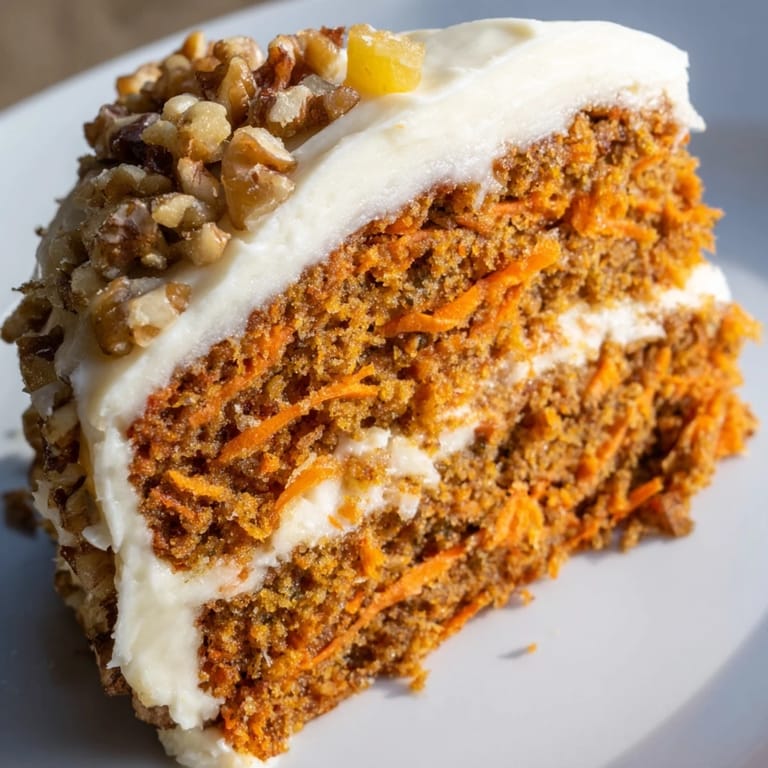
- Once cakes are completely cool, place one layer on your serving plate, spread frosting over the top, then add the second layer. Frosting the sides and top comes last; top with extra nuts or a light scatter of grated carrot if you want it to look intentional.
 Pin It
 There was a moment, standing in my kitchen at midnight after frosting the whole thing, when I stepped back and realized this cake was exactly what it needed to be—not fancy, not trying too hard, just honest and generous. That's when I stopped second-guessing myself and started understanding why people ask for it by name.
Why Toasting Nuts Changes Everything
I didn't toast nuts for years, and the cake was always fine, but the first time I spent five minutes on a skillet with walnuts, the difference surprised me. Toasted nuts have a deeper, almost savory edge that plays against the sweetness instead of just adding texture. It's a small move that proves the difference between a good cake and one people actually remember.
Storage and Serving Wisdom
This cake improves on day two, when the spices have time to settle and the crumb becomes even more tender. Kept covered in the refrigerator, it stays fresh for five days, and you can actually freeze the unfrosted cake layers for up to a month if you're planning ahead. Frosted cake doesn't freeze as gracefully, but room temperature serving is better anyway—let it sit out for thirty minutes before slicing.
Make It Your Own
This is a cake that invites small adjustments without complaint. Pecans instead of walnuts shift the flavor toward buttery and subtle, while walnuts keep it earthier and more pronounced. Raisins add a chewiness that some people love and others skip; neither choice is wrong. If you want to go nut-free, the cake stands perfectly well on its own, though you might add an extra half-cup of crushed pineapple for texture.
- A pinch of black pepper in the frosting adds a whisper of complexity that nobody can identify but everyone notices.
- Serve with strong black tea or a dessert wine; the spices pair beautifully with bitter tannins.
- This cake is generous enough to feed twelve, which means you can bring it somewhere and still have cake at home.
 Pin It
 This cake has fed birthdays and potlucks and quiet afternoons when someone needed comfort in dessert form. Make it, and it becomes part of your own kitchen story.
Recipe FAQs
- → What spices complement the carrot and nuts?
Cinnamon, nutmeg, and ginger bring warm, aromatic notes that perfectly enhance the natural sweetness of carrots and nuts.
- → How do chopped nuts affect texture?
Chopped walnuts or pecans add a pleasant crunch and contrast to the moist cake crumb, enriching the overall mouthfeel.
- → Can pineapple be substituted or omitted?
Pineapple adds moisture and a subtle tang; it can be omitted but may slightly change the cake's moistness and flavor profile.
- → How is the cream cheese frosting made smooth?
Beating cream cheese and butter until creamy before gradually adding powdered sugar ensures a light and fluffy frosting texture.
- → What is an easy way to check doneness when baking?
Insert a toothpick into the center; if it comes out clean or with few crumbs, the cake is done baking.