 Pin It
 There's something about red velvet cake that stops conversations mid-sentence. I learned this at my cousin's wedding reception when someone brought out a three-layer red velvet creation, and suddenly everyone went quiet—not in disappointment, but in that reverent way people do when something looks too beautiful to eat. That's when I decided I needed to master this cake myself, to understand why the color alone could command a room and why the flavor was somehow both cocoa and cream cheese whispered together instead of shouted.
I baked this for my neighbor after she helped us move in, and I'll never forget her opening the container, pausing, then looking up at me with actual tears in her eyes. She said it reminded her of Sunday dinners at her grandmother's house in Georgia. That's when I understood this cake isn't really about the ingredients or even the technique—it's about the memory you bake into every layer.
Ingredients
- All-purpose flour (2 ½ cups): The foundation that gives structure; sift it with the cocoa and leavening agents so everything incorporates evenly and you avoid dense patches.
- Unsweetened cocoa powder (2 tablespoons): Not for chocolate flavor but for that subtle depth that makes people say they taste something they can't quite name.
- Baking soda (1 teaspoon) and salt (½ teaspoon): Baking soda reacts with the buttermilk and vinegar to give the cake its tender crumb; salt balances the sweetness.
- Granulated sugar (1 ½ cups) and softened butter (1 cup): Creaming these together properly takes about 3 minutes and should look pale and fluffy, like clouds you could almost touch.
- Eggs (2 large, room temperature): Room temperature eggs blend smoothly; cold ones fight the batter and can make the cake grainy.
- Buttermilk (1 cup, room temperature): The tang is essential—it's what makes this cake taste like velvet instead of just sweetness.
- Vegetable oil (½ cup): Oil keeps this cake moist for days; butter alone would make it drier as it sits.
- Red food coloring (1 ounce): Gel coloring gives a deeper, more vibrant red than liquid, and you won't thin the batter.
- Vanilla extract (2 teaspoons for cake, 1 for frosting): Use real vanilla; the cake deserves it.
- White vinegar (1 teaspoon): The secret that makes the cocoa flavor bloom and helps the cake rise perfectly.
- Cream cheese (8 ounces, softened) and butter (½ cup, softened): Both must be soft or the frosting will be grainy and impossible to work with smoothly.
- Powdered sugar (4 cups, sifted): Sift it so there are no lumps; one overlooked lump ruins the whole frosting's texture.
Tired of Takeout? 🥡
Get 10 meals you can make faster than delivery arrives. Seriously.
One email. No spam. Unsubscribe anytime.
Instructions
- Prepare your pans and preheat:
- Set your oven to 350°F and grease those cake pans well, then flour them so nothing sticks. This step takes two minutes but saves hours of frustration.
- Sift your dry ingredients:
- Flour, cocoa powder, baking soda, and salt go through the sifter together—this breaks up any clumps and ensures everything is evenly distributed so you don't bite into a pocket of baking soda.
- Cream the butter and sugar:
- Beat them together for about three minutes until the mixture is pale, fluffy, and almost doubled in volume; this traps air bubbles that make the cake light. You'll know it's ready when it looks like fluffy frosting.
- Add eggs one at a time:
- Mix each egg in completely before adding the next; this helps them emulsify into the batter instead of creating a slippery mess. Watch the batter transform from grainy to silky.
- Mix in oil, vanilla, and vinegar:
- Stir these in until fully combined; the vinegar will seem like an odd addition but trust it completely.
- Combine the buttermilk and red coloring:
- Mix them in a separate bowl so the color distributes evenly through the buttermilk instead of streaking the batter.
- Alternate wet and dry ingredients:
- Start with dry, then add one-third of the buttermilk mixture, then more dry ingredients, then more buttermilk, ending with dry; this is crucial. Mix only until combined—overmixing develops gluten and makes the cake tough. You want it to come together gently, like you're coaxing it rather than forcing it.
- Pour and bake:
- Divide the batter evenly between your pans and bake for 28 to 30 minutes until a toothpick inserted in the center comes out clean or with just a few moist crumbs. The cake will smell heavenly, and you'll be tempted to pull it out early—don't.
- Cool with patience:
- Let the cakes rest in their pans for 10 minutes, then turn them out onto wire racks; this prevents them from becoming dense on the bottom. Complete cooling is non-negotiable before frosting, or the frosting will melt into the warm cake.
- Make the frosting:
- Beat the softened cream cheese and butter together until completely smooth with no streaks of butter visible, then gradually add the sifted powdered sugar so the frosting doesn't become grainy. Beat until it's light and fluffy, about 2 to 3 minutes.
- Frost and finish:
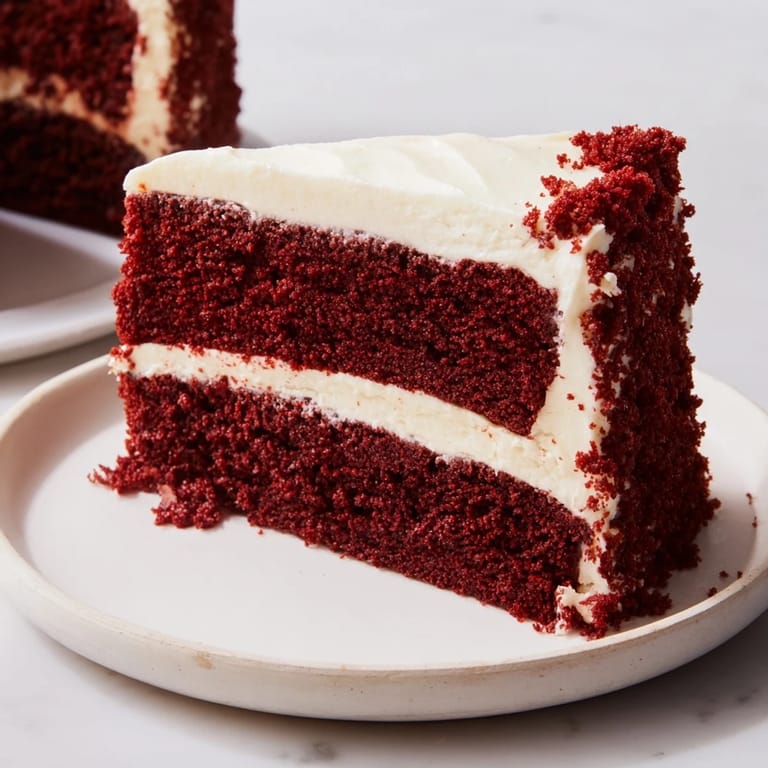
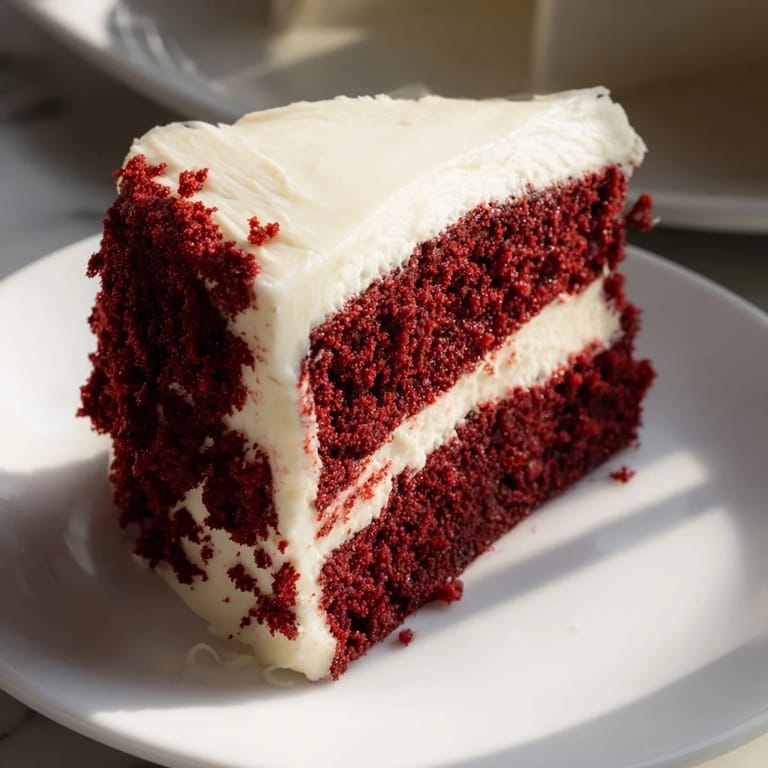
- Spread a generous layer of frosting between the cake layers, then frost the top and sides, smoothing it with a warm spatula dipped in hot water if you want it pristine. Some people leave little swirls; others prefer mirror-smooth surfaces.
 Pin It
 I remember frosting my first red velvet cake at midnight because I'd procrastinated all day, and my hands were shaking slightly because I wanted it to look perfect for a friend's birthday. When she cut into it the next morning and found that deep red layer, the moist crumb, the perfect frosting, she hugged me longer than for any store-bought cake. That's when I realized this cake means more than its ingredients.
The Secret to Perfect Texture
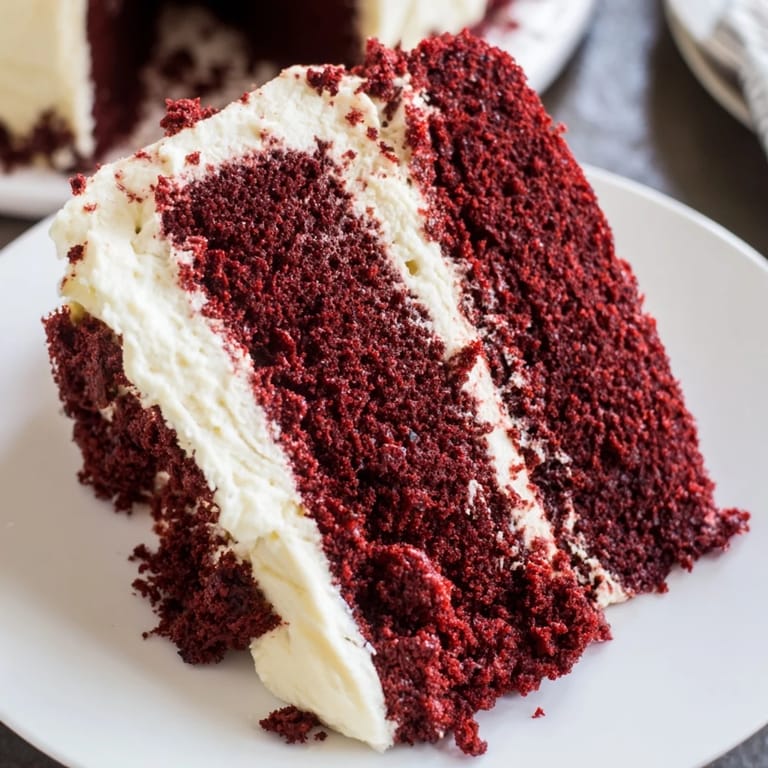
The magic in red velvet cake comes from the balance between cocoa powder, buttermilk, and vinegar. The cocoa powder is there for subtle flavor and depth, not chocolate richness—use unsweetened cocoa only. The buttermilk provides tang and moisture, while the vinegar activates the baking soda and brightens everything. Many bakers skip the vinegar thinking it's unnecessary, but it's actually the ingredient that makes people pause and ask what they're tasting. These three ingredients work together so the cake tastes elegant and sophisticated instead of basic.
Why the Frosting Is Everything
A red velvet cake without proper cream cheese frosting is just a cocoa cake wearing red lipstick. The frosting is why people remember this cake. It should taste like real cream cheese with a slight tang, not like butter with cream cheese hiding inside. The key is using equal parts cream cheese and butter—too much cream cheese makes it fragile and hard to spread, but enough butter keeps it workable while letting the cheese flavor shine through. Sift your powdered sugar because one tiny lump in the frosting will bother you every time you take a bite.
Storage and Serving Wisdom
Red velvet cake actually tastes better the next day when the flavors have settled and mingled together, so bake it ahead if you can. Keep it covered in the refrigerator—the cream cheese frosting needs cold to stay stable and gorgeous. It keeps beautifully for five days, which means you can make this for yourself on a Sunday and still have perfect slices on a Friday night.
- Serve it slightly chilled straight from the refrigerator so the frosting stays pristine and the cake tastes its best.
- Pair it with hot coffee in the morning or sparkling wine in the evening—both somehow make the cake taste even more special.
- If you want to garnish, a dusting of cake crumbs or fresh berries on top looks elegant without trying too hard.
 Pin It
 This cake has a way of making ordinary moments feel like celebrations. Bake it for yourself and taste what people have been obsessing over for generations.
Recipe FAQs
- → What gives red velvet cake its distinctive color?
The vibrant red hue comes primarily from red food coloring, which combines with cocoa powder to create the cake's signature appearance.
- → Why is buttermilk used in this cake?
Buttermilk adds a mild tang while reacting with baking soda to provide a light, tender texture and subtle flavor depth.
- → How can I ensure the cake stays moist?
Careful mixing, avoiding overmixing, and proper baking time help maintain moisture. Using oil and buttermilk also contributes to a soft crumb.
- → What is the role of cream cheese in the frosting?
Cream cheese provides a rich, tangy base that balances sweetness, creating a smooth and luxurious frosting texture.
- → Can I substitute the red food coloring?
Yes, natural alternatives like beet juice powder or gel coloring can be used, though they may slightly alter the flavor or shade.