 Pin It
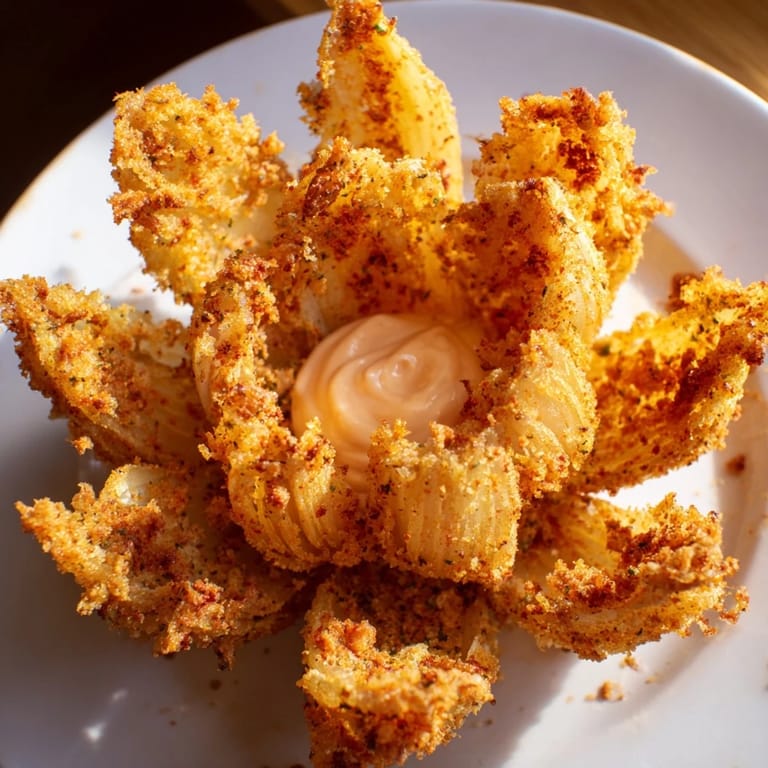
 The first time I watched someone bite into a blooming onion, I understood why it became such a beloved appetizer. There's something magical about that moment when you crack through the golden, crispy exterior and the tender, caramelized petals release their sweet aroma. I was working the line at a busy restaurant years ago, and this dish was our secret weapon for impressing tables before the main course even arrived. Now, I make it at home whenever I want to create that same sense of occasion, that feeling that something special is about to happen.
I remember serving this to my sister's friends during a casual dinner party, and someone asked if we'd ordered it from a restaurant. The look of disbelief when I said I'd made it ten minutes before they arrived was worth every second of prep work. Watching people tear into those petals, dipping each one in that creamy sauce, reminded me that the best meals aren't always complicated, they just need to feel a little bit indulgent.
Ingredients
- 1 large sweet onion (Vidalia preferred): Vidalia onions have a natural sweetness that caramelizes beautifully when fried, but any large sweet onion works in a pinch.
- 2 1/2 cups all-purpose flour: This is your dry coating base, so don't skimp on quality.
- Paprika, garlic powder, oregano, salt, black pepper, cayenne pepper: These create a savory, slightly spicy seasoning blend that balances the onion's sweetness.
- 2 large eggs and 1 cup whole milk: The egg wash creates the glue that holds your coating in place and keeps it adhered through the double-dredge.
- Vegetable oil for frying: Use a neutral oil with a high smoke point; peanut or canola oil work beautifully.
- 1/2 cup mayonnaise, 2 tablespoons sour cream, ketchup, horseradish, smoked paprika, garlic powder, cayenne, salt and pepper: This sauce is tangy, creamy, and has a subtle kick that cuts through the richness of the fried onion.
Tired of Takeout? 🥡
Get 10 meals you can make faster than delivery arrives. Seriously.
One email. No spam. Unsubscribe anytime.
Instructions
- Make your dipping sauce first:
- Whisk together mayo, sour cream, ketchup, horseradish, smoked paprika, garlic powder, cayenne, salt, and pepper in a small bowl. This gives flavors time to mingle while you prep the onion, and it's one less thing to worry about once you start frying.
- Prepare your onion for transformation:
- Peel the onion and trim just 1/2 inch off the stem end, leaving the root completely intact as your anchor. Place it cut-side down, then starting about 1/2 inch from the root, make downward cuts all around the onion to create 12 to 16 sections. The goal is to create petals without cutting all the way through the root, so take your time and use a sharp knife.
- Separate the petals gently:
- Flip the onion over and carefully pull the petals apart, spreading them out like a flower opening at dawn. You want them loose enough to cook evenly but still connected at the root.
- Build your coating station:
- In one bowl, mix flour with paprika, garlic powder, oregano, salt, black pepper, and cayenne. In another bowl, beat eggs with milk until combined. This is your dredging setup, so arrange them so you can move fluidly between them.
- First coat: flour mixture:
- Dredge the onion in the seasoned flour, really working it between all the petals and making sure every surface is coated. Shake off any excess, but don't be shy about getting the coating in there.
- Second coat: egg wash:
- Dip the floured onion into the egg mixture, letting it flow between the petals. This is what makes the next flour coating stick, so take a moment to let it really soak in.
- Final coat: double flour:
- Coat the onion in the flour mixture one more time, pressing gently so the coating adheres without packing down. This double-dredge creates those gorgeous, craggy layers that get so crispy.
- Heat your oil to the perfect temperature:
- Pour at least 3 inches of oil into a deep pot or fryer and bring it to 375°F (190°C). Use a thermometer, not a guess, because this temperature is what transforms the coating into crispy gold without burning it.
- Fry until golden and crispy:
- Using a slotted spoon or spider, carefully lower the onion cut-side down into the hot oil. Fry for 6 to 8 minutes, turning occasionally, until it's deep golden brown and the petals are crispy. You'll smell when it's close to done.
- Drain and season while hot:
- Lift the onion onto a paper towel-lined plate and let the oil drain away. Sprinkle lightly with salt while it's still hot so the seasoning clings to the crispy surface.
- Serve immediately:
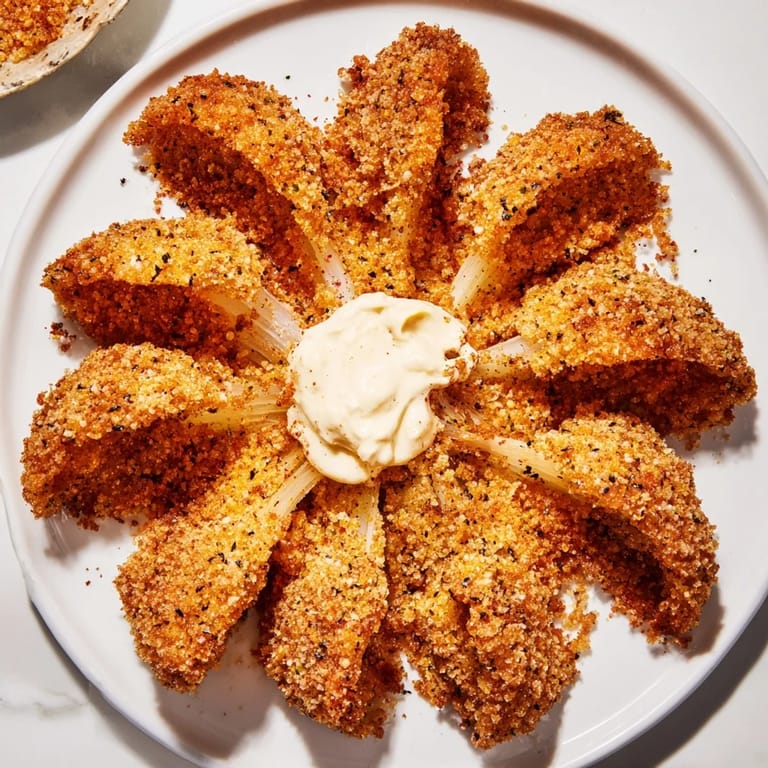
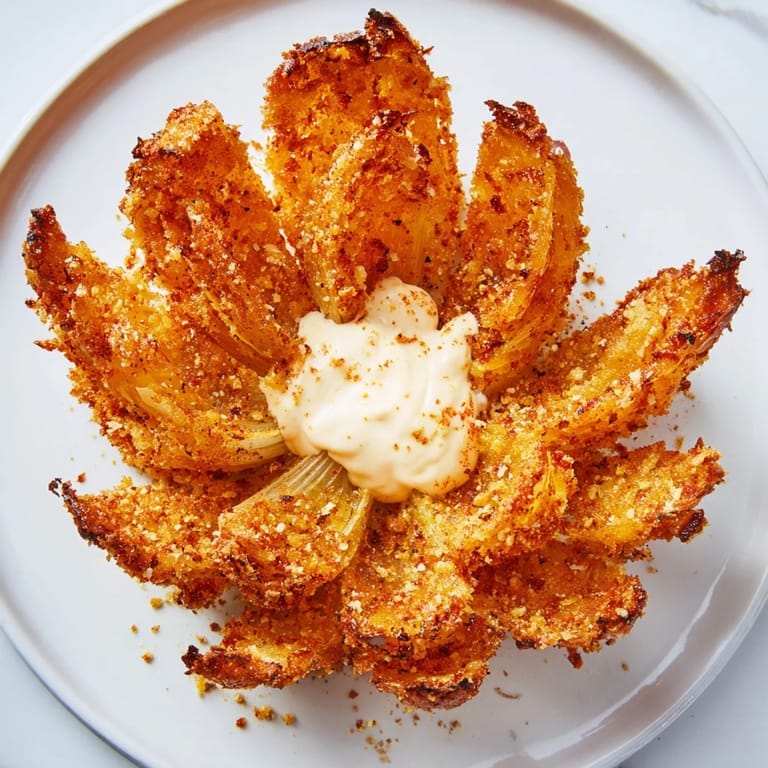
- Transfer to a serving plate with that creamy dipping sauce waiting alongside. Blooming onions are best eaten right away, while every petal is still crackling.
 Pin It
 There's a moment, maybe thirty seconds into the frying, when the batter suddenly puffs and the whole kitchen smells like caramelized onion and spices. That's when you know you've got it right. I still get that same quiet satisfaction watching the bloom transform from raw vegetable to something that looks like it came from a fancy steakhouse.
Why This Appetizer Works Every Time
A blooming onion isn't just food, it's theater. It arrives at the table looking dramatic and impossible, yet everyone immediately understands how to eat it. The combination of crispy exterior and tender, almost buttery interior keeps people reaching for petal after petal. And because you're frying it whole, the onion stays together beautifully, making it feel more elegant than it has any right to be.
Mastering the Cut
The cutting technique is the only part that intimidates people, but once you do it once, it becomes second nature. I always use my sharpest knife and take my time, because rushing the cuts can result in petals that separate too much or a root that breaks. A good blooming onion cutter makes this foolproof, but a steady hand and a keen knife work just as well. The moment those petals spread open is genuinely satisfying.
The Sauce is the Secret
That creamy dipping sauce is what transforms this from impressive to unforgettable. The horseradish gives it a subtle sharpness, while the smoked paprika adds depth that makes people wonder what your secret ingredient is. Make it a few hours ahead if you can, and the flavors deepen beautifully. It also keeps in the fridge for days, so you'll have it on hand for other uses.
- You can make this sauce days ahead and store it in a covered container in the fridge.
- Adjust the heat level by adding more or less cayenne pepper to match your crowd's preferences.
- This sauce is also phenomenal with roasted vegetables, grilled chicken, or even fries.
 Pin It
 This dish reminds me that the most memorable meals are often the ones that feel a little bit special, a little bit indulgent. A blooming onion does that effortlessly.
Recipe FAQs
- → How do you prepare the onion for frying?
Trim the onion top, keeping the root intact, then make 12-16 downward cuts to create petals without cutting through the root. Gently separate the petals before coating.
- → What seasoning goes into the batter?
The batter includes paprika, garlic powder, oregano, salt, black pepper, and cayenne for a balanced, spicy taste.
- → What is the ideal oil temperature for frying?
Heat vegetable oil to around 375°F (190°C) for perfectly crispy, golden onion petals.
- → Can the dipping sauce be made ahead?
Yes, the creamy dipping sauce can be whisked together in advance and chilled until serving to enhance flavors.
- → What tools help in making this dish easier?
A sharp chef's knife, mixing bowls, a whisk, and a slotted spoon or spider for safe frying are recommended.