 Pin It
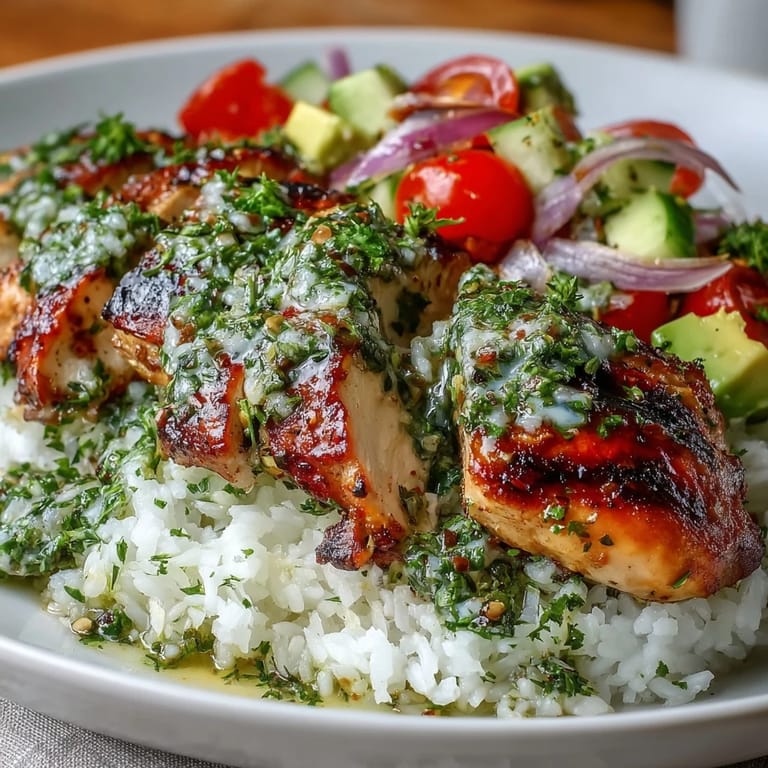
 There's something about chimichurri that stops people mid-conversation. My neighbor brought a container of it to a potluck years ago, and I watched grown adults abandon their own dishes to hover around hers. The green herb sauce seemed simple enough, but the way it made everything taste alive—chicken, rice, even the plain cucumber—felt like magic. I went home that night determined to crack the code, and this chimichurri chicken bowl became my answer to feeding people something that tastes like you've been cooking all day when really you've barely started.
I made this for my sister's book club last spring, and what started as a casual lunch became the thing everyone asked for the recipe to. She'd mentioned wanting something fresh and bright, not heavy, and I remembered how that chimichurri had changed my life. Watching people pile their bowls and actually pause between bites to comment on the flavors—that's when I knew this deserved to be in regular rotation.
Ingredients
- Fresh parsley: This is the backbone of your sauce, so don't skip it or use dried as a shortcut; fresh parsley has a clean brightness that dried versions can't match.
- Fresh cilantro: I've learned that some people have a genetic thing with cilantro tasting like soap, so taste as you go and adjust to your preference.
- Garlic cloves: Minced small means they disappear into the sauce rather than bite your mouth; I learned this the hard way with chunky garlic in my first attempt.
- Fresh oregano: The dried version works in a pinch, but fresh oregano adds a subtle sweetness that makes people ask what your secret ingredient is.
- Extra-virgin olive oil: Quality matters here since there's nowhere for mediocre oil to hide; this is your main flavor carrier.
- Red wine vinegar: The acid cuts through richness and wakes up every bite; don't use balsamic or white vinegar, as they'll throw off the balance.
- Red pepper flakes: A small amount goes a long way, and you can always add more heat but you can't take it back.
- Boneless, skinless chicken breasts: They cook evenly and stay tender when marinated; pound them to even thickness if they're thick on one end.
- White or brown rice: I use jasmine when I want something lighter, but any rice works as your foundation.
- Cherry tomatoes: Halving them prevents them from rolling off your bowl, and they stay fresher longer than larger tomatoes.
- Cucumber: Dice it just before assembling so it doesn't weep and make your bowl soggy.
- Avocado: Add this at the last moment so it stays creamy and doesn't oxidize to an unappetizing gray.
- Red onion: Thin slices are less aggressive and add crunch without overpowering the other vegetables.
Tired of Takeout? 🥡
Get 10 meals you can make faster than delivery arrives. Seriously.
One email. No spam. Unsubscribe anytime.
Instructions
- Build your chimichurri base:
- In a bowl, combine the parsley, cilantro, minced garlic, oregano, olive oil, red wine vinegar, red pepper flakes, salt, and pepper. Stir until everything is evenly mixed and the herbs are broken down by the oil. Set aside one-third cup of this vibrant green sauce to drizzle on finished bowls, leaving the rest for marinating the chicken.
- Get the chicken marinating:
- Place your chicken breasts in a resealable bag or shallow dish and pour the chimichurri marinade over them, turning to coat all sides. Refrigerate for at least 30 minutes; if you have time, let it sit for a couple hours to really absorb those herb flavors.
- Heat your cooking surface:
- When you're ready to cook, preheat your grill, grill pan, or skillet to medium-high heat so it's hot and ready when the chicken hits it. Pat the marinated chicken dry with paper towels and season both sides lightly with salt and pepper.
- Cook the chicken until golden:
- Place the chicken on your hot surface and let it cook undisturbed for 6 to 7 minutes on the first side until it develops a light golden crust and releases easily. Flip and cook another 6 to 7 minutes until the internal temperature reaches 165°F and the juices run clear when you pierce the thickest part.
- Rest before slicing:
- Remove the chicken to a cutting board and let it rest for about 5 minutes; this keeps the juices inside rather than spilling onto your plate. Then slice it against the grain for tender, easy-to-eat pieces.
- Assemble your bowls:
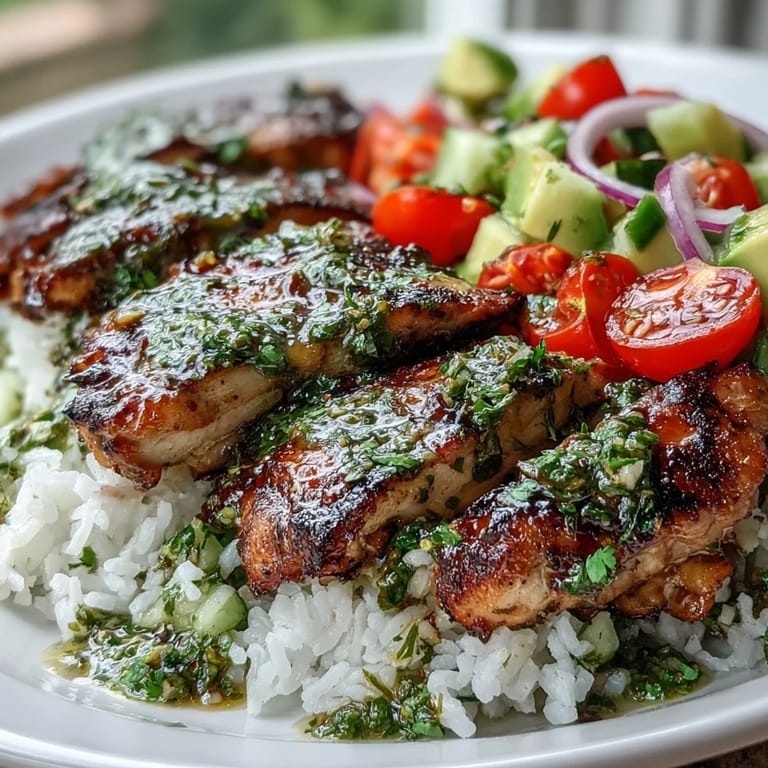
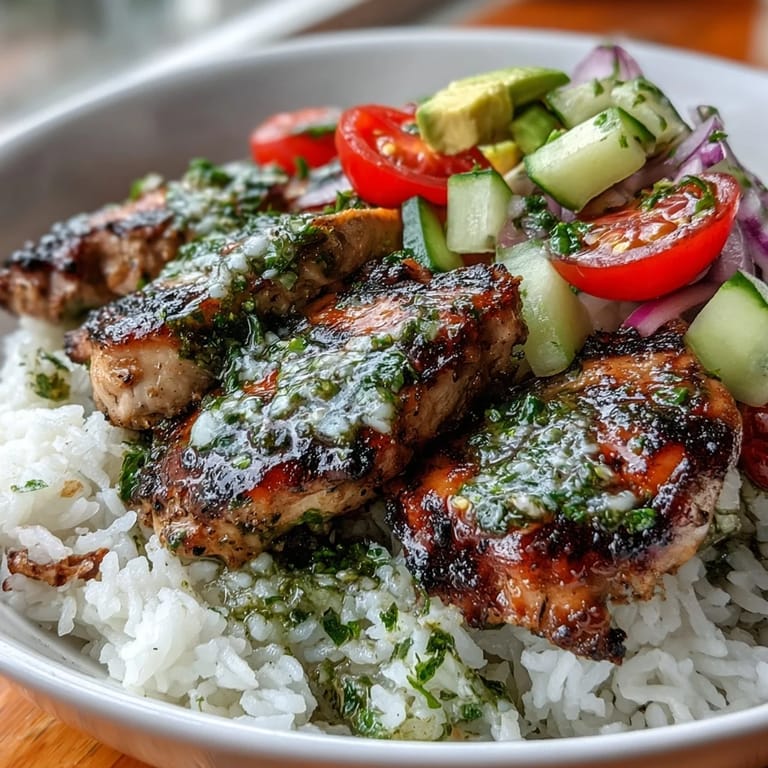
- Divide your cooked rice among four bowls as your base, then arrange the sliced chicken on top along with the cherry tomatoes, cucumber, avocado, and red onion in sections. Drizzle generously with your reserved chimichurri sauce, garnish with fresh cilantro or parsley, and serve with lime wedges for squeezing.
 Pin It
 The magic of this bowl is how it turns cooking into a conversation. I've made it for solo lunches where I slow down enough to taste each layer, and I've made it for crowds where people build their own and discover their favorite combination. It's become my go-to reminder that the best meals don't require stress or complicated techniques—just fresh ingredients and a sauce that makes everything better.
Prep Work That Changes Everything
I used to think this recipe was quick because the cooking part is quick, but I've learned that the real time saver is prepping everything before you start. Mince your garlic, chop your herbs, and dice your vegetables all at once in one focused session. Once the chicken hits the pan, you're just juggling warm components rather than scrambling around your cutting board with a hot skillet waiting for you.
Customizing Your Bowl Without Losing the Plot
This recipe is forgiving enough to handle swaps and additions without falling apart. I've made it with grilled chicken thighs when breasts seemed boring, used cauliflower rice for a lighter option, and thrown on crumbled feta when the bowl needed richness. The key is respecting the chimichurri as your anchor—that herbaceous, garlicky sauce ties everything together no matter what vegetables or proteins you're using.
Make It Your Thing
Once you nail this recipe, it becomes a template for improvisation rather than a rigid set of rules. I've found that grilled corn, black beans, and roasted peppers all live happily in these bowls, and you can shift the vegetables with the seasons. The technique stays the same, but the personality becomes yours.
- Grill extra chicken and shred it for quick lunch bowls throughout the week.
- Make a double batch of chimichurri and keep it in the fridge for drizzling over eggs, fish, or roasted vegetables.
- Toast your rice with a little butter and garlic the day before to add another layer of flavor.
 Pin It
 This bowl has become my answer to the question of how to eat well without overthinking it. It's the kind of food that makes you feel good afterward—nourished and satisfied without feeling heavy.
Recipe FAQs
- → What makes chimichurri sauce special?
Chimichurri combines fresh herbs like parsley and cilantro with garlic, olive oil, and red wine vinegar. The result is a bright, tangy sauce that adds incredible depth to grilled meats while tenderizing them during marination.
- → How long should I marinate the chicken?
Marinate for at least 30 minutes to absorb flavors, but up to 4 hours yields even better results. The acid in the vinegar helps break down proteins, making the chicken more tender and infused with herb flavors.
- → Can I use chicken thighs instead?
Absolutely. Chicken thighs work beautifully and often stay juicier due to higher fat content. Adjust cooking time to 8-10 minutes per side depending on thickness, ensuring internal temperature reaches 165°F.
- → What other vegetables work well in this bowl?
Grilled bell peppers, roasted corn, black beans, or shredded cabbage add great texture and flavor. For a grain-free version, swap rice for cauliflower rice or serve over mixed greens.
- → How long does chimichurri sauce keep?
Store extra sauce in an airtight container in the refrigerator for up to one week. The flavors actually develop and meld over time. Bring to room temperature before serving for the best consistency.