 Pin It
 There's something about assembling a bowl that feels less like cooking and more like painting. A few years back, I found myself with a handful of roasted vegetables, some leftover grains, and an urge to make something that didn't require me to think too hard but still felt nourishing. The result was this vegetable and legume bowl, which has since become my go-to when I want to feel genuinely fed without spending hours in the kitchen. What started as improvisation turned into a ritual I actually crave.
I made this for a friend who was going through a phase of eating only takeout, and watching her eat a full bowl, then immediately ask for the recipe, felt like a small victory. She's been making it weekly now, swapping vegetables based on what's at the market, and I love that it's become her thing too.
Ingredients
- Quinoa, brown rice, or farro (1 cup): Choose based on what you have or what you're craving; quinoa cooks fastest and has a nutty bite, while brown rice is earthier and more forgiving if you're timing things loosely.
- Water or vegetable broth (2 cups): Broth adds flavor without extra effort, but water works beautifully too.
- Salt (1/2 tsp for grains): Don't skip this; it seasons the grain from the inside out.
- Cooked chickpeas (1 cup): Canned is perfectly fine and saves you from planning ahead, but they'll taste fresher if you rinse them well under cold water.
- Cooked lentils (1 cup): Green or brown lentils hold their shape better than red, which turn into mush.
- Red bell pepper, zucchini, red onion, cherry tomatoes, broccoli florets: These are the backbone, but swap them for whatever's in season or on sale; the roasting magic works on almost everything.
- Olive oil (2 tbsp) and spices: The smoked paprika and cumin aren't just flavor; they're what make roasted vegetables taste intentional rather than bare.
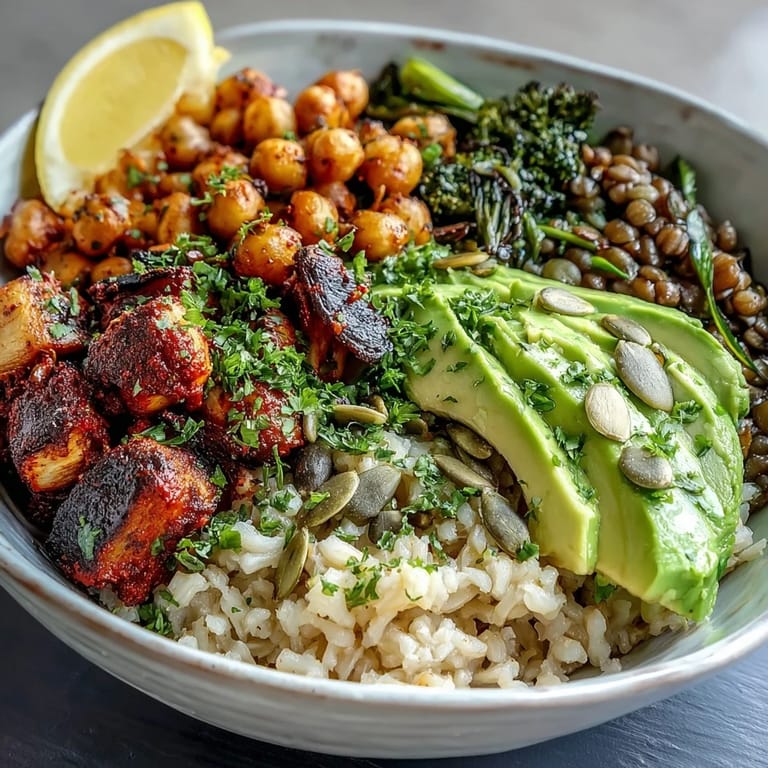
- Fresh parsley, avocado, toasted pumpkin seeds: These finish the bowl with texture and brightness that you'll actually notice.
- Tahini, lemon juice, garlic (for dressing): This is where the bowl becomes memorable; the dressing is creamy, tangy, and nothing like bottled ranch.
Tired of Takeout? 🥡
Get 10 meals you can make faster than delivery arrives. Seriously.
One email. No spam. Unsubscribe anytime.
Instructions
- Start Your Oven and Grains:
- Preheat your oven to 425°F and get a pot of water or broth boiling with salt. The grains need time to cook while the vegetables roast, so don't skip this step even if you're tempted to multitask all at once.
- Cook Your Chosen Grain:
- Add your grain once the liquid boils, lower the heat to a gentle simmer, cover, and let it do its thing. Quinoa takes about 15 minutes, brown rice closer to 40, and farro sits somewhere in between; set a timer and trust it.
- Prepare and Season the Vegetables:
- While the grain simmers, cut your vegetables into roughly similar sizes so they roast evenly. Toss them in a bowl with olive oil, smoked paprika, cumin, salt, and pepper until each piece is coated, then spread them on a baking sheet in a single layer.
- Roast Until Golden:
- Slide the baking sheet into your hot oven and roast for 20 to 25 minutes, stirring halfway through so the edges catch color. You're looking for vegetables that are tender but still have some charred spots; that's where the flavor lives.
- Warm Your Legumes:
- If you want them warm rather than room temperature, heat the chickpeas and lentils in a small pan with a splash of olive oil, salt, and pepper for a couple of minutes. This is optional but makes the whole bowl feel warmer and more cohesive.
- Whisk Your Dressing:
- Combine tahini, lemon juice, minced garlic, salt, and pepper in a small bowl and whisk until smooth. Add water a tablespoon at a time until you reach a drizzling consistency; it should flow but not be thin.
- Assemble Your Bowls:
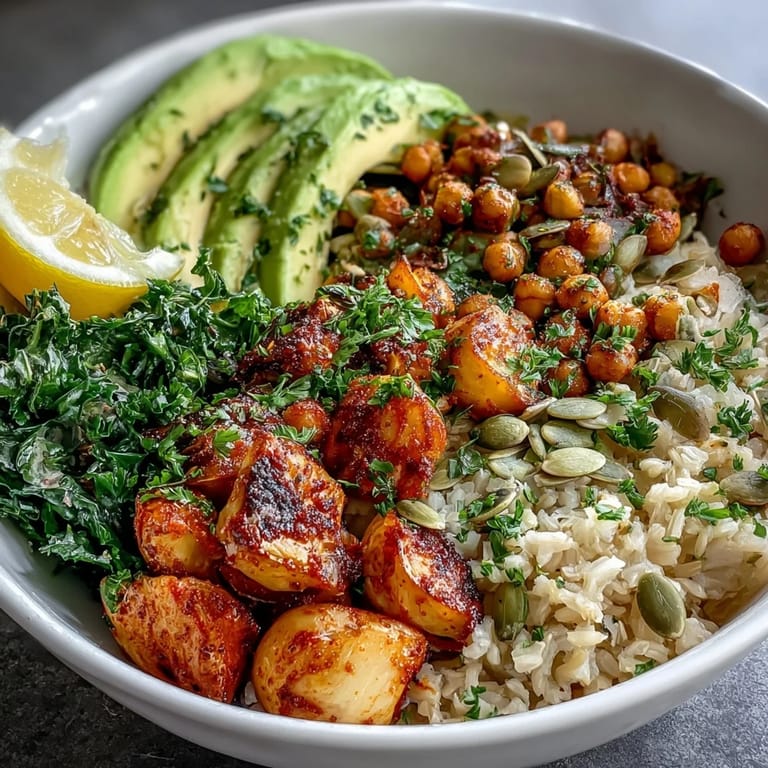
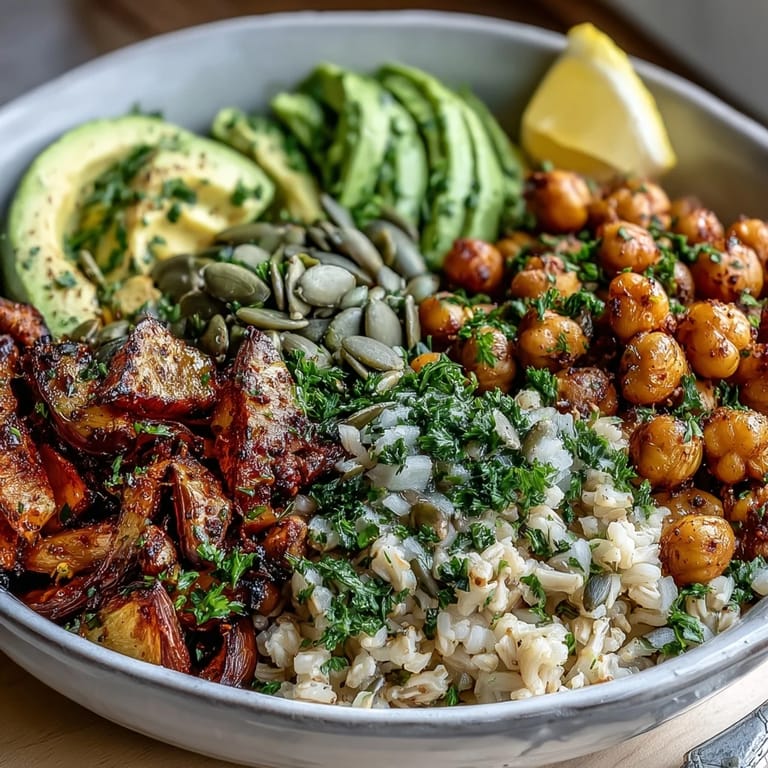
- Divide the cooked grain among four bowls as your base, then top each with roasted vegetables and warm legumes. Drizzle the tahini dressing over everything, letting it pool in pockets and coat the grains.
- Finish and Serve:
- Top each bowl with fresh parsley, avocado slices, and toasted pumpkin seeds, then serve with lemon wedges on the side. A squeeze of fresh lemon just before eating brightens everything and makes it taste like you worked harder than you did.
 Pin It
 The best part about this bowl happened on a quiet Tuesday when I realized I was actually looking forward to lunch instead of just eating to get through the afternoon. It's become a reminder that nourishing food doesn't have to be complicated, just thoughtfully assembled.
The Power of Roasting
Roasting vegetables changes their entire personality. What starts as raw and slightly vegetal becomes sweet, concentrated, and almost caramelized by the time it hits your bowl. The oven does the heavy lifting while you're handling everything else, and the magic happens without you standing there watching. I used to think roasting was a hassle, but now I see it as the secret to making simple ingredients taste intentional.
Building Your Bowl
The order matters less than you might think, but I've found that grains as a base, then vegetables, then legumes, then the dressing creates a bowl that's easy to eat and looks intentional when you sit down. Every bite should have a little bit of everything, so don't pile one ingredient on top of another; spread them around and let them mingle. The dressing is what brings it all together, so don't be shy with it.
Variations That Work
This bowl is honestly flexible enough to live in your kitchen year-round without feeling repetitive. In summer, swap the roasted vegetables for raw ones like cucumber and snap peas; in winter, add roasted sweet potato or cauliflower. The legumes can rotate too—black beans and white beans work just as well as chickpeas and lentils, and the dressing stays the same.
- Keep tahini on hand because once you make this dressing, you'll want it on everything from grain bowls to roasted vegetables to salads.
- Toast your own pumpkin seeds instead of buying them pre-toasted; they taste fresher and the kitchen smells incredible while they roast.
- Make the dressing a day ahead and store it in the fridge, so you have less to do when you're assembling bowls on a busy evening.
 Pin It
 This bowl has become my answer to the question of what to eat when I want something that feels nourishing but doesn't require a recipe I need to follow. It's reliable, flexible, and genuinely satisfying in ways that matter.
Recipe FAQs
- → Can I prepare this bowl ahead of time?
Absolutely! The grains, roasted vegetables, and legumes can be cooked up to 4 days in advance. Store each component separately in airtight containers in the refrigerator. Assemble bowls when ready to serve and add fresh garnishes like avocado and herbs just before eating.
- → What other grains work well in this bowl?
Beyond quinoa, brown rice, and farro, try barley, bulgur wheat, millet, or freekeh for different textures and flavors. For a lighter option, couscous works beautifully. Just adjust cooking times according to package directions.
- → How can I add more protein to this bowl?
While chickpeas and lentils provide substantial protein, you can boost it further by adding grilled tofu, tempeh, or a hard-boiled egg. For non-vegetarian options, grilled chicken or salmon pairs wonderfully with the roasted vegetables and tahini dressing.
- → Can I use frozen vegetables instead of fresh?
Yes, frozen vegetables work well in a pinch. Thaw them completely and pat dry before tossing with spices and roasting. Note that frozen vegetables may release more moisture during roasting, so you might need to extend cooking time slightly to achieve desired caramelization.
- → Is the tahini dressing necessary?
The tahini dressing adds a creamy, nutty element that complements the roasted vegetables beautifully. If you need a substitute, try a lemon-herb vinaigrette, avocado crema, or even a simple drizzle of high-quality olive oil with lemon juice. The dressing helps marry all the components together.