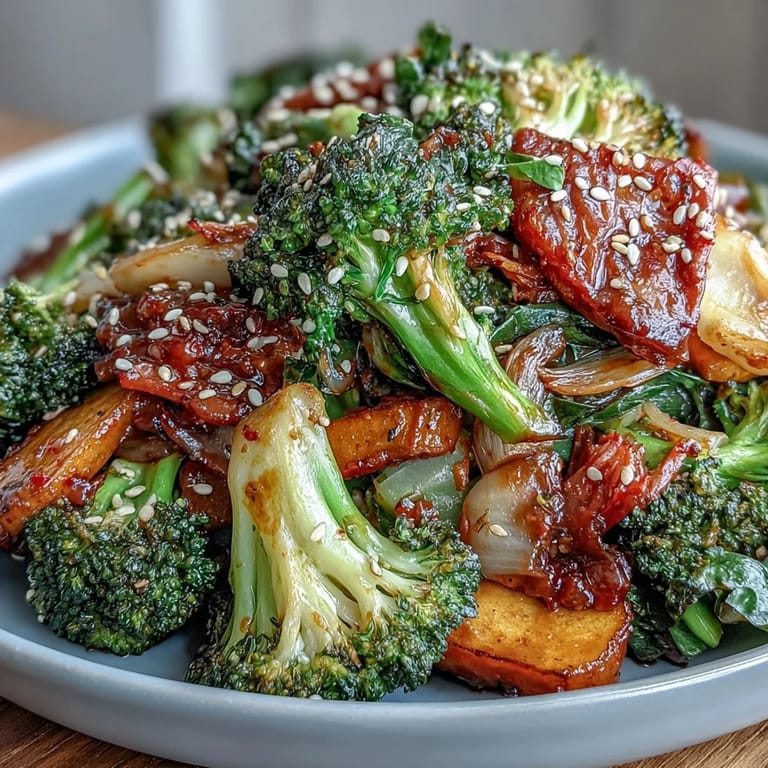
 Pin It
 Last January, I was standing in my kitchen on a particularly gray morning, staring down a pile of root vegetables that felt slightly uninspired. My partner had just started a fermentation hobby, and there was a jar of kimchi sitting on the counter with that unmistakable funky-spicy scent. I thought, why not throw them together? That accidental combination turned into something unexpectedly comforting—the kind of meal that made the whole apartment smell warm and alive.
I made this for a dinner party once when an unexpected guest mentioned they were vegan, and I had exactly 30 minutes to pivot. The relieved expression on their face when I set down a steaming bowl of this stir-fry—colorful, aromatic, and completely plant-based—reminded me that the simplest dishes often feel the most generous.
Ingredients
- Broccoli florets: They soften just enough to be tender without turning mushy, and they'll soak up the sesame oil like little flavor sponges.
- Carrots (bias-sliced): The angle cut isn't just for show—it exposes more surface area to the heat and creates those slightly caramelized edges that make a real difference.
- Parsnip: Earthier and sweeter than you might expect, it adds a subtle depth that regular potatoes skip right over.
- Sweet potato matchsticks: These cook quickly and add natural sweetness that balances the kimchi's funk without needing extra sugar.
- Green cabbage: Shredded and added near the end, it stays crisp and becomes almost silky when tossed with the sauce.
- Red bell pepper: Adds brightness both visually and in flavor, and it barely needs cooking to taste perfect.
- Fresh ginger (grated): This is where the warming magic starts—grate it yourself if you can, because the aroma alone will make you hungry.
- Garlic (minced): 30 seconds in hot oil transforms it from sharp to mellow and sweet.
- Toasted sesame oil: Use the toasted kind, not regular—it has nuttiness that's impossible to replicate and makes the whole dish smell incredible.
- Soy sauce or tamari: Tamari if you need gluten-free, but either one adds umami depth that makes vegetables taste like they actually matter.
- Rice vinegar: The acidity brightens everything and keeps the flavors from getting heavy.
- Maple syrup or honey: Just enough to round out the sharp edges without making it sweet.
- Kimchi (chopped): Add this after cooking ends so the beneficial probiotics stay alive—think of it as a finishing touch, not an ingredient.
- Green onions and sesame seeds: Optional but genuinely worth it for texture and that final hit of freshness.
Tired of Takeout? 🥡
Get 10 meals you can make faster than delivery arrives. Seriously.
One email. No spam. Unsubscribe anytime.
Instructions
- Mise en place:
- Chop everything and lay it out before the pan gets hot—this stir-fry moves fast, and scrambling for vegetables halfway through will derail you.
- Heat and aromatics:
- Get your wok or large skillet screaming hot with sesame oil, then let the ginger and garlic bloom for just 30 seconds until your kitchen smells like a restaurant. Don't let them brown—you want fragrant, not burnt.
- Hardy vegetables first:
- Carrots, parsnip, sweet potato, and broccoli go in together because they need about 4-5 minutes of actual cooking to reach that crisp-tender sweet spot. Stir constantly so nothing gets stuck or scorches.
- Finish with delicate vegetables:
- Cabbage and bell pepper join the party in the final 3-4 minutes, staying just tender enough to still have some bite. This is where the colors get bright and the pan really comes alive.
- Sauce and toss:
- Whisk soy sauce, rice vinegar, and maple syrup together in a small bowl, then pour it over everything and toss to coat. The sauce will glaze the vegetables and deepen all the flavors.
- Cool slightly before kimchi:
- Pull the pan off the heat and let it rest for about 20 seconds, then add the chopped kimchi and toss gently. The heat will warm it through without killing the probiotics.
 Pin It
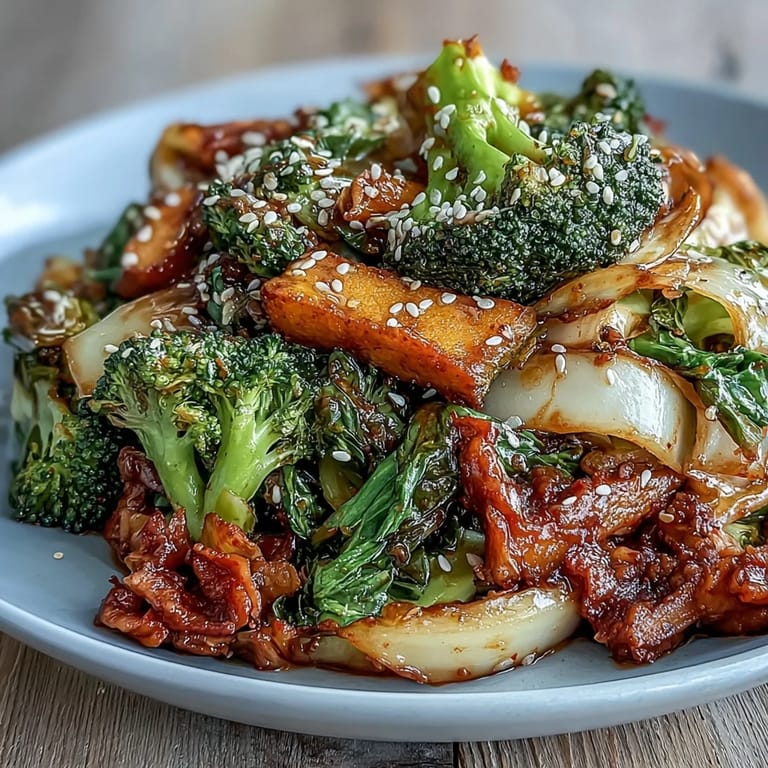
 There's something almost meditative about the sound of vegetables hitting hot oil, the way the whole kitchen fills with steam and nutty sesame smell. This dish has a way of turning an ordinary Tuesday night into something that feels intentional and nourishing.
Building Layers of Warmth
Winter stir-fries work because they're built on contrast—hot oil against cool vegetables, the earthiness of root vegetables against the sharp fermented funk of kimchi. Each component is simple on its own, but together they create something that feels bigger than the sum of its parts. The ginger and garlic create a foundation of warmth that carries through the entire dish, making it feel like comfort food even though it's technically raw fermented vegetables on top.
Why Kimchi Finishes Better Than It Cooks
I learned this the hard way by cooking kimchi into oblivion and wondering why it tasted flat and mushy. Now I understand that kimchi is already cooked in a sense—it's alive with bacteria and flavor compounds that develop over time. Adding it at the end is like finishing a painting with the final brushstroke. The residual heat warms it through, but it keeps its texture, its bite, and most importantly, those beneficial probiotics that supposedly help your gut.
Scaling and Seasonal Swaps
This recipe scales beautifully up or down depending on how many people you're feeding, and the actual vegetables matter less than the principle—anything that's firm enough to stay intact during cooking works. Turnip, rutabaga, kale, Brussels sprouts that are halved—winter gives you options, and the sesame-ginger-kimchi formula plays well with almost anything. Some nights I'll use whatever's at the market instead of following the ingredient list exactly, and the stir-fry somehow always comes together. The real magic isn't in the specific vegetables; it's in the method and the acid and that final fermented pop.
- Serve it over steamed rice, quinoa, soba noodles, or even mashed cauliflower if you're looking to keep it lighter.
- Make extra and store it in the fridge for about three days—it reheats beautifully and tastes even better as flavors meld.
- Adjust kimchi to taste because store-bought versions vary wildly in spice level and intensity.
 Pin It
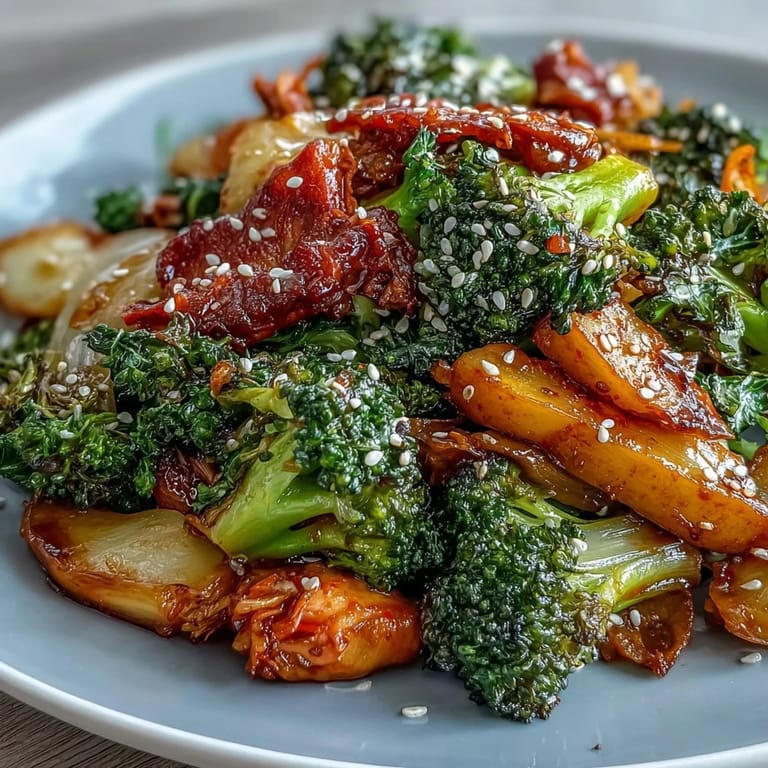
 This stir-fry taught me that the best meals don't need to be complicated, just intentional. It's the kind of dish that makes you feel like you're actually cooking something, not just heating up ingredients.
Recipe FAQs
- → Can I make this gluten-free?
Yes, simply substitute tamari for the soy sauce and ensure your kimchi is certified gluten-free. Most traditional kimchi contains fish sauce or shrimp paste, so check labels carefully if you have shellfish allergies.
- → Why add kimchi at the end instead of cooking it?
Adding kimchi at the end preserves the beneficial probiotics and live cultures that can be destroyed by high heat. It also maintains the kimchi's crisp texture and vibrant flavor while still allowing it to warm through and meld with the other vegetables.
- → What other winter vegetables work well?
Turnips, rutabaga, kale, Brussels sprouts, and butternut squash all work beautifully. Choose hearty vegetables that hold their shape when stir-fried. Leafy greens like kale should be added in the last 2 minutes of cooking.
- → Can I meal prep this dish?
The vegetable base can be prepared up to 3 days in advance and reheated in a skillet. For best results, store the kimchi separately and add it when reheating to preserve the probiotics and prevent the vegetables from becoming too soft.
- → How can I add more protein?
Crispy tofu, edamame, or tempeh work wonderfully for a plant-based protein boost. If you're not vegetarian, thinly sliced chicken, beef, or shrimp can be stir-fried first, then set aside and added back in step 6.
- → Is this dish spicy?
The spice level depends on your kimchi. Traditional kimchi has moderate heat, but you can choose mild versions or adjust the amount to your preference. The ginger adds warmth without significant spiciness.