 Pin It
 There's something about the smell of turmeric hitting hot oil that instantly shifts the entire mood of a kitchen—suddenly everything feels like it's working toward something good. I discovered this soup on a gray afternoon when I needed something that felt both nourishing and uncomplicated, and it's become the dish I turn to when I want to feed people without fussing. The golden color alone seems to lift spirits before anyone takes a single spoonful. It's the kind of meal that tastes like care without requiring you to be a skilled cook. That's what keeps me coming back to it.
I made this for my neighbor last winter when she was recovering from being under the weather, and watching her face as she took that first taste—like something inside her just relaxed—that's when I knew this recipe had something special. She asked for the ingredients before she'd even finished the bowl. Now it's become my go-to gift in a pot, the thing I bring when words feel insufficient.
Ingredients
- Boneless, skinless chicken breasts (2 breasts, about 400 g), diced: Cutting them into bite-sized pieces means they cook quickly and stay tender in the broth—avoid those thin chicken cutlets or they'll disappear.
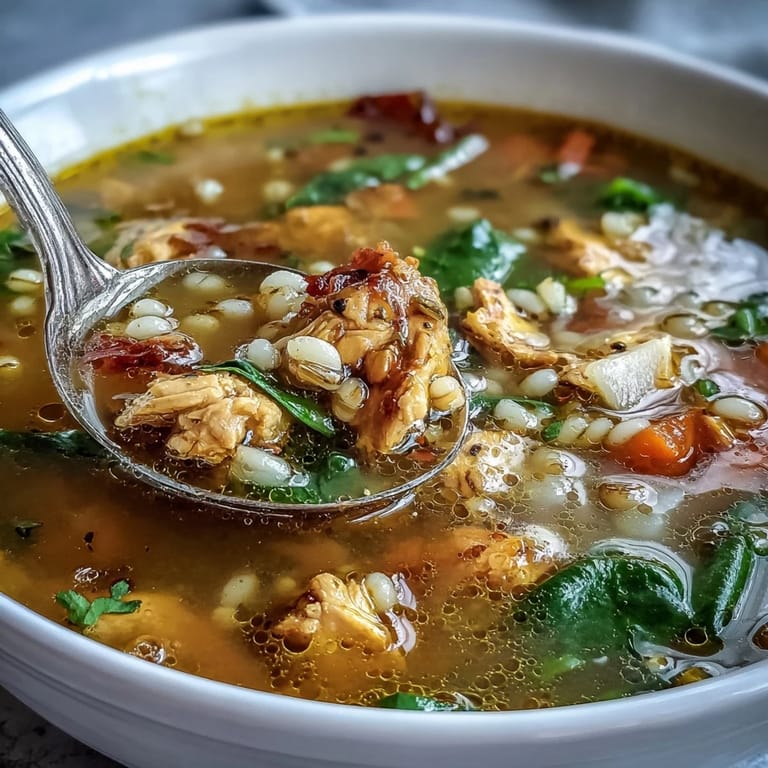
- Pearl barley (3/4 cup or 120 g), rinsed: This is the quiet star of the soup, absorbing flavor while adding body and a gentle chewiness that makes it feel more substantial than it actually is.
- Carrots (2 medium), peeled and diced: These soften beautifully and their natural sweetness balances the earthiness of the turmeric and spices.
- Celery stalks (2), diced: Yes, really—it builds that foundational savory depth that makes people say it tastes like someone who knows what they're doing made it.
- Onion (1 medium), finely chopped: Don't skip the sautéing step; those first few minutes of cooking onion create the aromatics that carry the entire soup.
- Garlic (3 cloves), minced: Fresh is non-negotiable here—jarred garlic won't give you that bright, sharp edge when it hits the hot oil.
- Zucchini (1 small), diced: This gets added later so it stays tender and doesn't turn to mush; it also lightens the soup so it doesn't feel heavy.
- Baby spinach (100 g): A handful of fresh greens added at the very end keeps its color and adds nutrition without requiring any real planning.
- Low-sodium chicken broth (6 cups or 1.5 L): The foundation of everything—taste it first because brands vary wildly, and you want room to adjust salt at the end.
- Olive oil (1 tbsp): Just enough to wake up the aromatics without making the soup feel greasy.
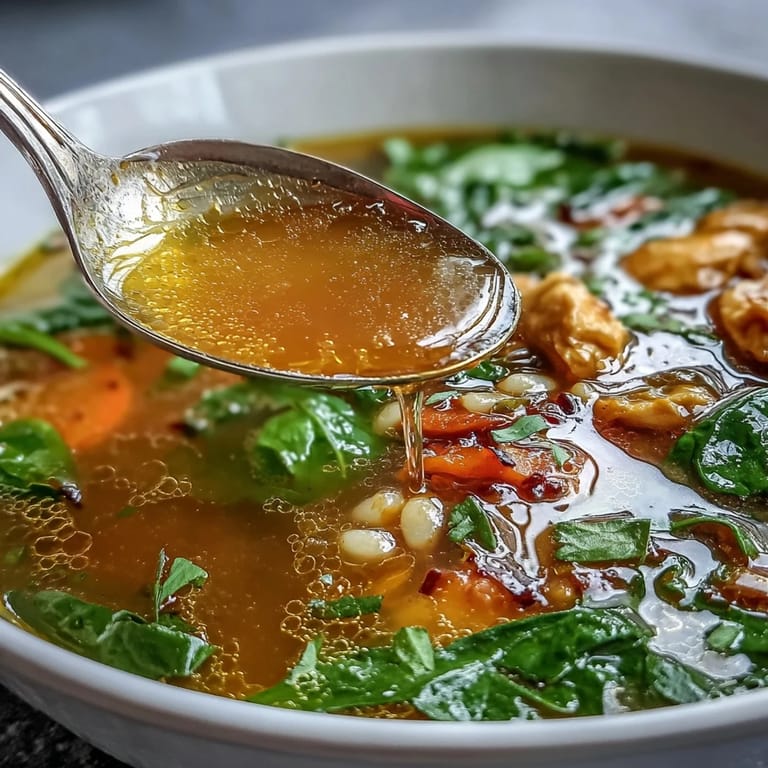
- Ground turmeric (1 1/2 tsp): This is the soul of the dish—warm it in the oil before adding liquid so it releases all its earthy warmth.
- Ground black pepper (1/2 tsp): Freshly ground if you have it; pre-ground is fine, but grind it fresh if you're starting to suspect yours has been sitting around.
- Ground cumin (1 tsp): Adds a subtle nuttiness that makes people ask what that flavor is without being able to pin it down.
- Ground coriander (1/2 tsp): The secret ingredient that rounds out the spice blend and keeps everything from tasting one-dimensional.
- Bay leaf (1): Don't forget to fish this out before serving, or you'll get that unpleasant surprise mid-spoonful.
- Salt (1/2 tsp, or to taste): Always taste before you serve—add more gradually because you can always add salt but you can't take it out.
- Lemon juice (from 1/2 lemon): This brightness at the end is what makes people sit up straighter in their chair; it cuts through the richness and wakes everything up.
- Fresh parsley, chopped, for garnish: A small handful scattered on top looks intentional and tastes fresh against the warm, spiced broth.
Tired of Takeout? 🥡
Get 10 meals you can make faster than delivery arrives. Seriously.
One email. No spam. Unsubscribe anytime.
Instructions
- Start your flavor foundation:
- Heat the olive oil in a large soup pot over medium heat until it shimmers slightly, then add your chopped onion, carrots, and celery all at once. You'll hear a gentle sizzle—that's what you want—and let them cook undisturbed for about 5 minutes, stirring occasionally, until the onion starts turning translucent and everything softens together.
- Bloom the spices:
- Add your minced garlic and all the warm spices—turmeric, cumin, coriander, and black pepper—stirring constantly for about 1 minute until the whole pot smells incredible and the spices darken slightly. This single minute transforms those raw spices into something warm and alive.
- Seal in the chicken:
- Toss in your diced chicken pieces and stir them around for about 3 minutes until they're lightly browned on the outside—they don't need to be cooked through yet, just kissed by the heat. This locks in flavor and keeps the chicken from turning gray.
- Build the body:
- Pour in all your chicken broth and add the rinsed pearl barley and bay leaf, stirring to make sure nothing sticks to the bottom. Bring everything to a boil, then immediately reduce the heat to low, cover partially (or leave it uncovered—both work), and let it simmer gently for 35 minutes, which is just enough time for the barley to absorb the flavors and soften without turning to mush.
- Add the late-bloomer vegetables:
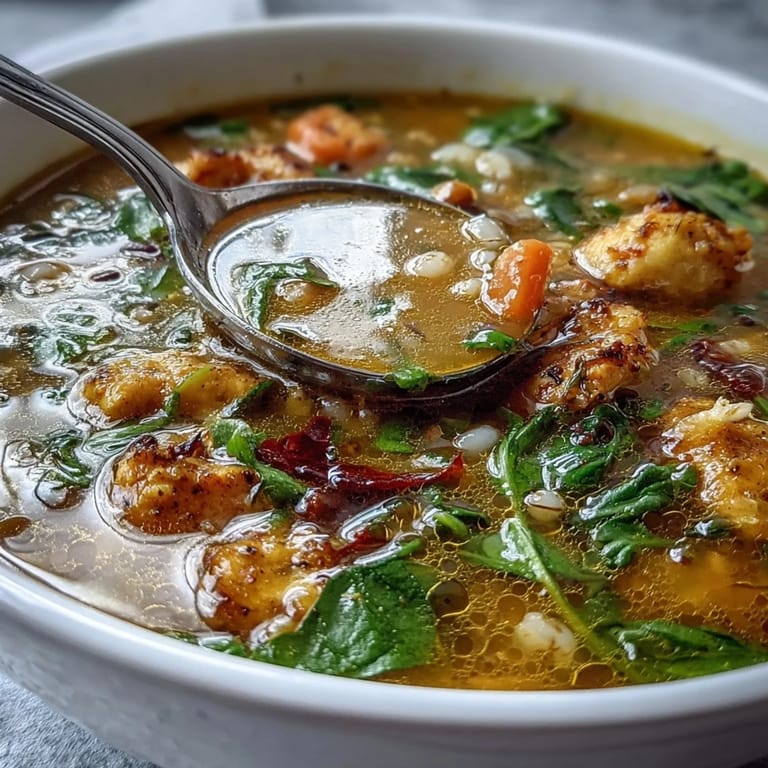
- After 35 minutes, stir in your diced zucchini and simmer for another 10 minutes until the barley is completely tender and the chicken is cooked through (it should shred easily with a spoon). The zucchini stays firm enough to have texture, not mushy.
- Finish with freshness:
- Stir in the baby spinach and cook for just 2 minutes until it wilts and turns bright green, then taste everything carefully. Add salt gradually and squeeze in that lemon juice—taste again because the lemon changes everything, brightening all those deep spice flavors—then fish out and discard the bay leaf before serving.
 Pin It
 My daughter came home from school one day during a particularly stressful week, took a bowl of this straight to the couch, and just sat there quietly eating until it was gone. She didn't say much about the soup itself, but something about the ritual of it—the warmth, the familiar smell—did something her words couldn't at that moment. Food doesn't always have to be dramatic to matter.
Why Pearl Barley Belongs Here
Most people think soup is just broth and vegetables, but pearl barley transforms it into something that actually satisfies—it absorbs all those spiced flavors while adding a gentle chewiness that keeps your spoon interesting. The first time I made this with just broth and chicken, it tasted lovely but somehow felt incomplete, like something was missing. The barley solved a problem I didn't know I had. If barley isn't in your pantry, farro works beautifully too, or even brown rice if you shorten the cooking time slightly and adjust liquid amounts accordingly.
The Turmeric Question
Turmeric gets talked about like it's magic, and while I'm skeptical of health claims that sound too good, there's something genuinely grounding about this particular spice that feels earned rather than marketed. The important thing is to cook it properly—raw turmeric just tastes dusty and slightly bitter, but when you warm it in oil first and let it bloom with the other spices, it becomes warm and almost sweet. I've learned to bloom it properly, and that's made all the difference in how this soup actually tastes. The spice blend here—turmeric, cumin, and coriander together—creates something more interesting than turmeric alone could ever be.
Making It Your Own
This soup has structure, but it also has flexibility built in, which is one reason I keep making it. You can add more vegetables if you have them—mushrooms, bell peppers, or kale all work beautifully—and the soup adapts without complaining. Some people add a pinch of chili flakes for gentle heat, or a splash of coconut milk to make it richer, and those choices don't break anything. The vegetarian version with chickpeas and vegetable broth is genuinely delicious and tastes just as satisfying, which doesn't always happen with substitutions.
- If you're making this gluten-free, swap the barley for brown rice or another gluten-free grain and adjust cooking time as needed.
- Leftover soup keeps beautifully for 3 days in the refrigerator and actually tastes better as the flavors deepen and mingle overnight.
- This pairs perfectly with warm, crusty bread and a quiet moment to actually enjoy eating it.
 Pin It
 This isn't the kind of recipe that demands perfection or requires you to have obscure ingredients on hand. It's the kind of recipe that exists to remind you that food, at its best, is simply something warm made with intention. Make it, share it, and trust that it will do what it's supposed to do.
Recipe FAQs
- → Can I make this soup vegetarian?
Yes, substitute the chicken breasts with chickpeas and swap the chicken broth for vegetable broth. The spices and barley will still create a hearty, satisfying soup.
- → What can I use instead of pearl barley?
Farro or brown rice work well as substitutes. Keep in mind that cooking times may vary slightly—brown rice typically takes a bit longer to cook than pearl barley.
- → Is this soup gluten-free?
The original recipe contains gluten due to the pearl barley. To make it gluten-free, replace the barley with brown rice or quinoa and ensure your broth is certified gluten-free.
- → Can I add more heat to this soup?
Absolutely! Add a pinch of red chili flakes when sautéing the vegetables, or stir in some fresh minced ginger with the garlic for extra warmth and depth.
- → How long will leftovers keep?
Store cooled soup in an airtight container in the refrigerator for up to 3 days. The barley will continue to absorb liquid, so you may need to add extra broth when reheating.
- → Can I freeze this soup?
Yes, freeze in portions for up to 3 months. Note that the barley texture may soften slightly upon thawing. Thaw overnight in the refrigerator before reheating gently on the stovetop.